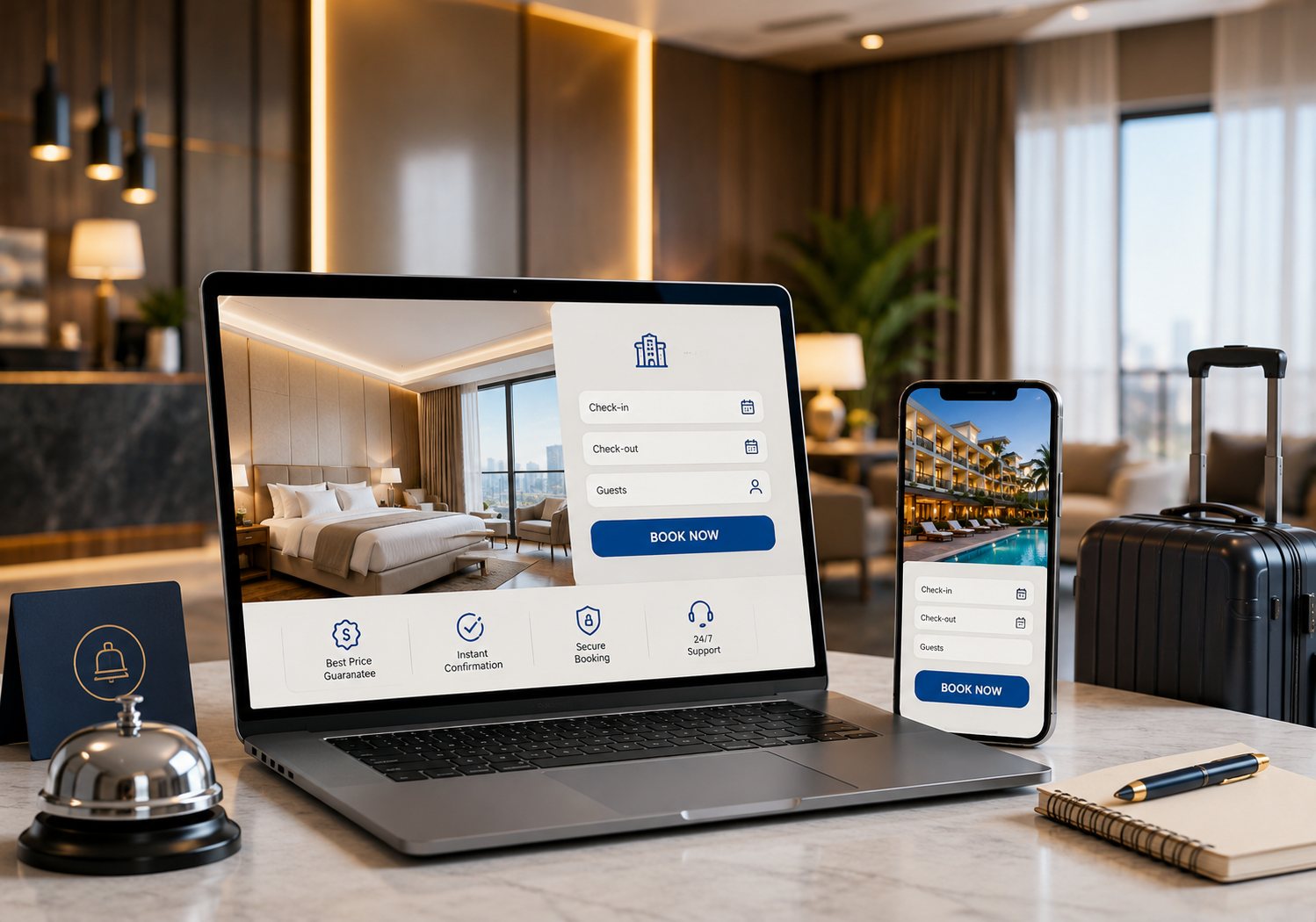

The best hotel booking engine in India offers can transform a hotel’s direct revenue in 2026. 🚀 Every hotelier hears the same pitch today. Cut OTA commissions. Own your guest data. Grow direct bookings. Not every platform actually delivers on that promise, though. This guide breaks down what really matters. It shows you exactly how to compare booking engines built for Indian hospitality, not adapted from a foreign template.
This isn’t guesswork either. The figures here come from live commission data across independent Indian hotels. That includes resorts and homestays running direct booking channels in 2026. Whether you run a single guesthouse or a small hotel group, the same core principles apply.
Which Is a Best Hotel Booking Engine In India? 🤔
Best hotel booking engine in India is software that lets guests reserve rooms directly on your website. It removes the OTA middleman entirely. Guests search dates, view live rates, and pay online. All of this happens without leaving your brand’s page.
The engine syncs inventory in real time. A room booked on your site instantly blocks out on every other channel too. That prevents double bookings and awkward guest calls.
Most Indian hotels still lean almost entirely on OTAs for bookings. That habit leaves money and guest relationships sitting on the table. A strong booking engine changes that math, one confirmed stay at a time.
Why Indian Hoteliers Need This in 2026 📈
OTA commissions in India commonly run between 15% and 25% per booking. Picture a property doing forty bookings a month. At an average rate of ₹4,500, that’s ₹1,80,000 in monthly revenue. An 18% OTA commission alone costs over ₹32,000 every month.
We covered this exact math in our guide on reducing OTA commission dependency. The short version matters here. Hotels that build a real direct channel typically see steadier margins within a few months.
There’s a second reason too. OTAs rarely share guest phone numbers until after a complaint arrives. A booking engine hands you that contact data immediately. That data fuels loyalty offers and repeat-stay campaigns down the line.
Types of Booking Engines Available Today 🧩
Indian hoteliers generally choose between three models. Each comes with real trade-offs worth understanding before you commit.
Standalone booking widgets simply plug into an existing website. They’re cheap, but they rarely include marketing tools or guest data ownership. Full-service platforms build an entire branded booking site around your property. They handle rates, inventory, and payments together. Marketplace-style engines sit somewhere in between, often bundling OTA-style visibility with a lower commission than traditional platforms.
Full-service platforms tend to deliver the strongest long-term value for independent hotels and resorts. They usually cost less over a full year, once every hidden fee gets counted properly.
Some platforms also charge extra for payment gateway access or WhatsApp integrations. Always ask for one combined price upfront. A single flat commission is far easier to budget around than several smaller add-on charges.
Key Features of a Top Hotel Booking Engine 🔑
Not all booking engines are built equally. Here’s what genuinely matters when you’re comparing options:
- Real-time rate and inventory sync across every channel 🔄
- Zero setup fees and no long-term lock-in contracts 💸
- Guest data ownership, not platform-controlled records 📇
- Mobile-first checkout with UPI, card, and net-banking support 📱
- WhatsApp and QR code booking links for offline-to-online conversion 📲
- Listing visibility on Google Hotel Ads alongside major OTAs 🌍
- Commission charged only after a stay is confirmed, never upfront ✅
A platform missing two or three of these features usually costs more than it saves over a year. Always request a live demo before signing anything. Ask specifically how guest data is handled after checkout.
OTA vs Direct Booking Engine: The Real Cost Comparison 💰
Here’s how the numbers typically break down for a mid-sized Indian property.
| Cost Factor | Typical OTA | Direct Booking Engine |
|---|---|---|
| Setup fee | ₹0 | ₹0 |
| Commission per booking | 15% to 25% | 7% |
| Charged on cancellations | Often yes | Never |
| Guest contact details | Withheld | Full access |
| Rate control | Platform-set | Property-set |
This isn’t a small difference. On ₹1,80,000 in monthly bookings, an 18% OTA commission costs roughly ₹32,400. A 7% direct engine commission costs closer to ₹12,600 instead. That gap leaves nearly ₹20,000 back in the property’s pocket every month. No room rates need to rise for that saving to happen.
Common Mistakes Hoteliers Make ⚠️
Many properties sign up for the first booking engine a sales call offers. That’s often a costly shortcut. Always compare at least two or three platforms side by side first.
Another mistake is ignoring cancellation policies buried in the fine print. Some platforms quietly charge commission even on cancelled stays. Always ask this question directly before signing anything.
A third mistake is underestimating support quality after launch. Rate changes, seasonal pricing, and festival demand spikes all need quick platform support. Slow response times during peak season can cost real bookings.
Finally, many hoteliers skip pairing their booking engine with local search tools. A well-optimized Google Business Profile multiplies direct traffic significantly. The two tools work best together, not separately.
Trust Signals Guests Look for Before Booking Direct 🔍
Guests hesitate before booking outside familiar OTA apps. A few trust signals fix that quickly. Clear cancellation policies, visible contact numbers, and secure payment badges all matter.
Genuine guest reviews displayed on the booking page help too. So does a working WhatsApp link for quick questions before payment. Properties that add these signals typically see stronger direct conversion within weeks, not months.
A booking engine that supports all of this out of the box saves significant setup effort later.
How to Choose the Right Booking Engine for Your Property 🧭
Start by asking five direct questions before signing up with any platform.
- Is there a genuine ₹0 setup fee, or hidden onboarding charges?
- Does commission apply on cancellations and no-shows?
- Do you get full access to guest names and phone numbers?
- Can your booking site go live within a few days?
- Does the platform support WhatsApp links and QR codes?
If a provider hesitates on any of these, treat that as a warning sign. Transparency remains the clearest marker of a trustworthy hospitality partner. Vague pricing pages almost always hide extra costs somewhere.
Why StayWithUs Is the Best Hotel Booking Engine in India Trusts 🏆
StayWithUs already powers direct bookings for 2,400+ properties across India. The model stays simple. There’s a ₹0 setup fee, and a flat 7% commission charged only after a stay is confirmed. Nothing gets billed on cancellations or no-shows, ever.
Every property gets a branded booking website live within 48 hours of onboarding. That includes real-time rate sync, secure UPI and card checkout, and WhatsApp booking links. QR codes for reception counters come standard too, alongside a Google Hotel Ads listing under the property’s own name.
Guest contact details always stay with the hotel, never withheld. That single feature has helped properties build loyalty programs OTAs simply don’t allow.
Hotels running corporate accounts benefit heavily from this model as well. Our guide on corporate hotel bookings without OTAs shows exactly how direct engines unlock that segment.
Real Numbers From Hotels Already on Direct 📊
A 32-room hotel in Jaipur reported that direct bookings now account for a third of total revenue. None of that revenue carries an OTA-style commission attached. A Goa resort saw its reception QR code outperform a paid listing upgrade within a single month.
A four-property group in Delhi shared a similar pattern. Getting a guest’s phone number at booking, instead of after a complaint, reshaped how they planned repeat stays. Small operational changes like this compound quickly across a full booking calendar.
These aren’t isolated cases either. Once guests find a branded, trustworthy booking page, repeat visits tend to follow naturally. Referrals often follow close behind. That’s the compounding value a strong engine builds over time, quarter after quarter.
Who Should Use a Direct Booking Engine? 🏘️
Independent hotels, resorts, and homestays benefit most from this shift. Small hotel groups running multiple properties see even larger savings at scale. Even boutique properties with under twenty rooms can recover setup effort within a single busy season.
Seasonal properties in hill stations and beach towns benefit especially during peak months. Direct bookings during high-demand weekends avoid the steepest OTA commission tiers entirely.
Larger chains with existing loyalty infrastructure may see smaller relative gains. For everyone else, the math consistently favors moving toward direct.
Quick Recap Before You Decide ✅
Keep this short checklist handy while comparing platforms:
- Flat commission, charged only after a confirmed stay
- Zero setup fees, with no long-term contract lock-in
- Full guest contact data handed to the property
- Live within a week, not buried in a long onboarding queue
- WhatsApp, QR code, and Google Hotel Ads support included
A platform that checks every box here is worth serious consideration. One that dodges these questions probably isn’t.
Frequently Asked Questions ❓
Q: What is the best hotel booking engine in India has for small hotels?
A: Look for ₹0 setup fees, low flat commissions, and guest data ownership. StayWithUs offers all three, built specifically for independent Indian properties.
Q: How much commission does a direct booking engine charge?
A: StayWithUs charges a flat 7%, billed only after a guest’s stay is confirmed. Most OTAs charge 15% to 25% per booking regardless of cancellations.
Q: Can I use a booking engine alongside existing OTA listings?
A: Yes. Most hotels run both together, gradually shifting more bookings toward the direct channel as guests discover it over time.
Q: How fast can a hotel booking website go live?
A: Typically within 48 hours of completing onboarding, once room details, rates, and photos are confirmed by the team.
Q: Does a booking engine work for resorts and homestays too?
A: Yes. Our guide on where to list hotels online covers property types beyond standard hotels as well.
Q: Is guest data really safer with a direct booking engine?
A: Yes. Guest details stay with the property instead of a third-party platform, supporting better service and stronger repeat-guest relationships.
Q: Do I need technical skills to set up a booking engine?
A: No. Most onboarding is handled by the provider’s team, from property details to rate configuration, within the first call.
Final Thoughts 🎯
Choosing the best hotel booking engine in India provides doesn’t have to feel complicated. Focus on transparent pricing first. Confirm guest data ownership next. Insist on commission charged only for confirmed stays, nothing more.
Those three factors separate a genuine partner from another middleman wearing a different logo. StayWithUs checks every one of those boxes, with 2,400+ hotels already proving the model works nationwide. Setup stays free, and takes about ten minutes to complete.